
Explore Our Resources and Publications
We provide a wide range of resources that capture key findings, policy briefs, and in-depth reports. These publications are designed to inform stakeholders, support decision-making, and promote meaningful dialogue on critical issues.
Through evidence-based insights and practical recommendations, our work bridges the gap between knowledge and action. Explore our collection to stay updated with the latest developments, innovative ideas, and impactful research shaping change in our communities.
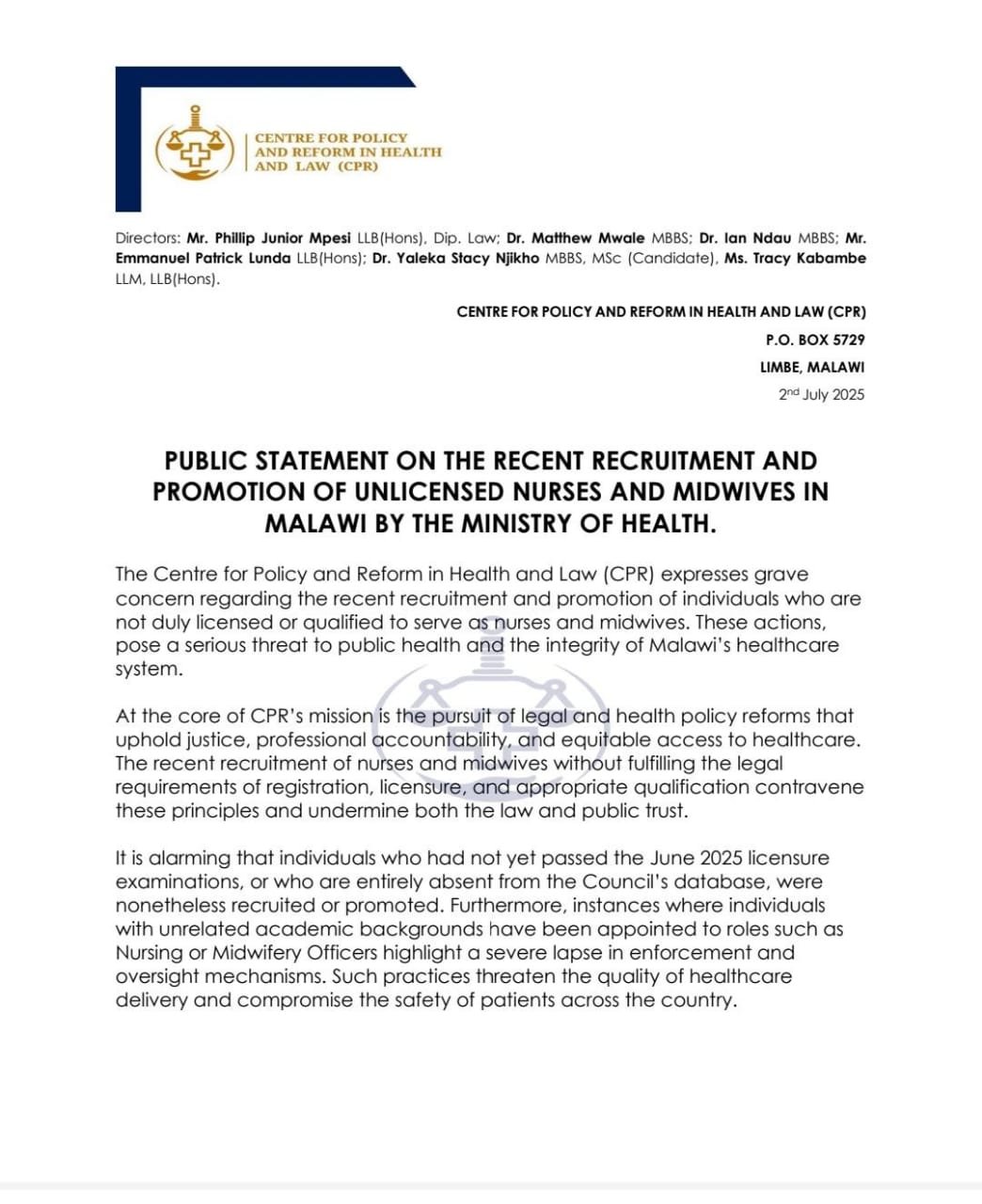
Statement on Unlicensed Recruitment
The Centre for Policy and Reform in Health and Law (CPR) raises grave concerns about the recent recruitment and promotion of unlicensed or unqualified nurses and midwives by Malawi’s Ministry of Health.
- Health Threat: These actions endanger public health and Malawi’s healthcare system integrity.
- Mission Conflict: Recruitment without legal registration and qualifications violates CPR’s mission for justice, accountability, and equitable healthcare.
- Unqualified Hires: Individuals failing the June 2025 licensure exams or lacking relevant qualifications, including those with unrelated backgrounds, were appointed to nursing and midwifery roles.
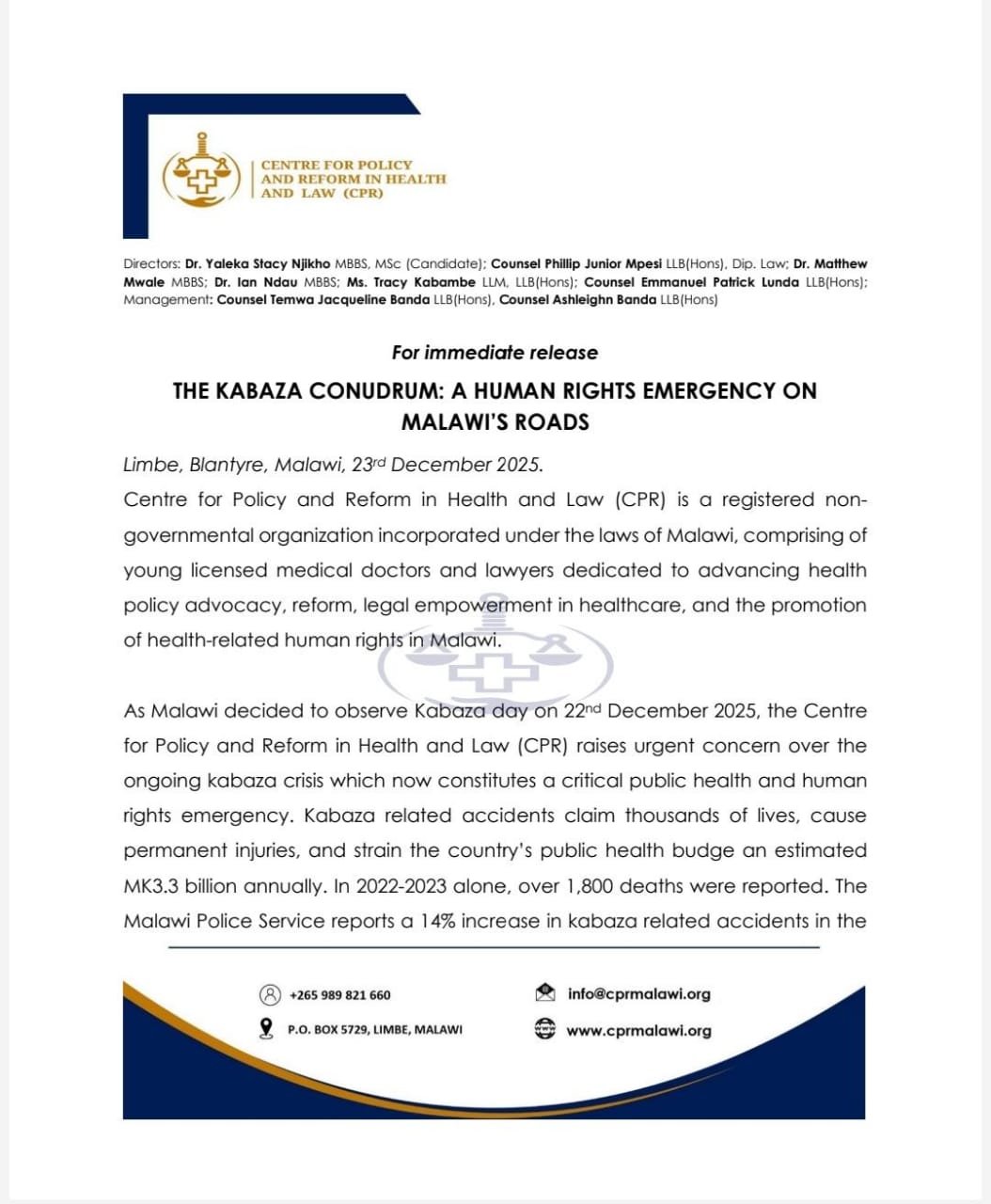
THE KABAZA CONUNDRUM
Centre for Policy and Reform in Health and Law (CPR) raises urgent concern over the escalating kabaza crisis, which now constitutes a critical public health and human rights emergency in Malawi.
- Public Health Threat: Kabaza-related accidents claim thousands of lives, cause permanent injuries, and cost the public health system an estimated MK3.3 billion annually.
- Rising Fatalities: Between 2022 and 2023, over 1,800 deaths were recorded, with a 14% increase in accidents in early 2025, according to the Malawi Police Service.
- Systemic Failures: The crisis is driven by unlicensed operators, underage riders, overloading, lack of protective gear, inadequate training, poor road infrastructure, and weak enforcement of traffic laws.
- Human Rights Impact: Kabaza accidents directly threaten constitutional rights, including the right to life, health, human dignity, work, and non-discrimination.
- Urgent Policy Action Needed: CPR calls for a multi-stakeholder national framework involving regulation, licensing, health screening, insurance coverage, road safety reforms, and strengthened enforcement.
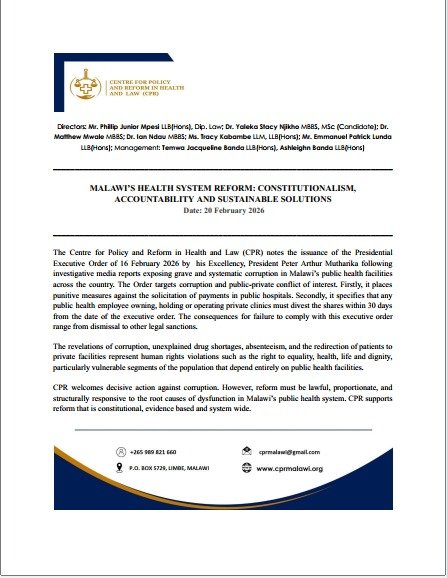
MALAWI’S HEALTH SYSTEM REFORM
The Centre for Policy and Reform in Health and Law (CPR) highlights critical legal and structural concerns regarding the Presidential Executive Order issued on 16 February 2026 to combat corruption in Malawi’s public health facilities
- Legal Conflict: The Executive Order’s mandate for public health employees to divest from private clinics within 30 days contradicts the Medical Practitioners and Dentist Act of 1984, which permits such ownership
- Constitutional Risk: Blanket prohibitions issued via executive instruction rather than legislative amendment threaten constitutional rights—including the rights to property, economic activity, and equality—and bypass the necessary separation of powers.
- Systemic Instability: Abrupt divestment without transitional safeguards risks driving essential specialist consultants and medical practitioners out of the public sector, further weakening a fragile health system already burdened by chronic underfunding and low remuneration.
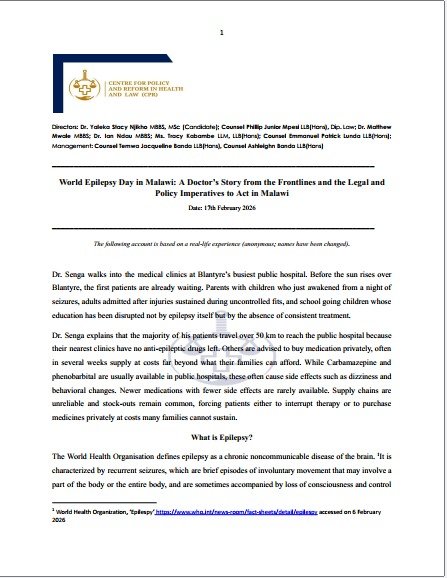
World Epilepsy Day in Malawi
The Centre for Policy and Reform in Health and Law (CPR) highlights the urgent need for systemic reform to address the critical gaps in epilepsy care and the legal imperatives for action in Malawi
- Health Threat: Inadequate access to consistent, effective treatment and unreliable supply chains for anti-epileptic drugs lead to preventable deaths, cognitive decline in children, and severe injuries from uncontrolled seizures..
- Mission Conflict: The failure to provide accessible, dignified care violates the right to health and international commitments, such as the Intersectoral Global Action Plan on Epilepsy and Other Neurological Disorders, which Malawi has yet to domesticate.
- Systemic Gaps: Malawi faces a profound shortage of specialists, with only three neurologists for over 20 million people, leaving the vast majority of patients without formal neurological assessment or standardized care guidelines